


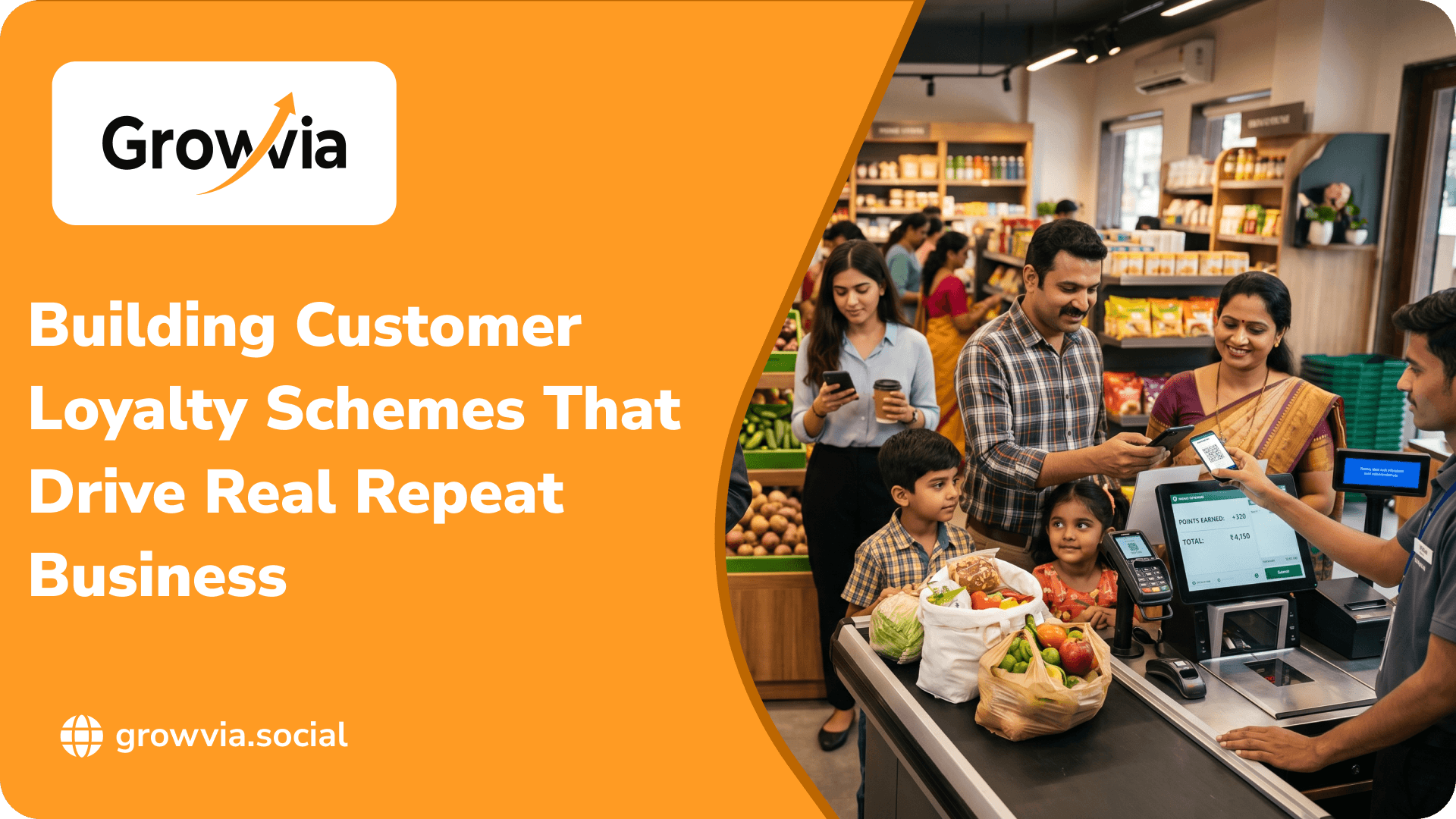
A customer walks into your store, places an order, enjoys the experience, and leaves with a smile. As a business owner, you consider it a successful sale. But weeks later, that same customer hasn’t returned. Does this scenario sound familiar?
Many companies invest heavily in attracting new customers through advertisements, social media campaigns, discounts, and promotions. While these efforts help generate sales, they often create a constant cycle of acquiring customers without building long-term relationships. As a result, businesses find themselves spending more money to replace customers than to retain them.
This is where a well-placed customer loyalty scheme can make a significant difference. Rather than simply rewarding purchases, an effective loyalty program encourages customers to stay connected with your brand and keep coming back. However, success depends on more than offering points or discounts. Businesses must also know how to promote loyalty scheme to customers in a way that highlights genuine value. When done right, customer loyalty programmes and schemes can turn occasional buyers into loyal customers who choose your business again and again.
The First Mistake: Rewarding Customers Without Understanding Them
Many businesses launch loyalty programs assuming rewards alone will drive repeat purchases, without first studying customer behavior.
Most customer loyalty reward schemes rely on discounts or points without clear behavioral insight
This leads to low engagement after initial sign-ups.
Customer may redeem once, but rarely return consistently
Programs become transactional instead of retention-focused
Looking at customer loyalty schemes examples, the most effective ones are not the most generous, but the ones built around real customer habits and motivations.
This gap is especially visible in customer loyalty schemes in the retail sector, where discount-heavy models often drive short-term sales but fail to build long-term loyalty.
Discover What Drives Repeat Purchases
Repeat purchases rarely happen by chance. They are driven by habit, convenience, trust, and perceived value. Before building any retention strategy, businesses need to understand the real reasons customers return, or don’t.
The Three Questions Every Business Should Answer Before Building a Loyalty Scheme
Why do customers buy?
Why do they leave?
What would motivate them to return sooner?
Answering these questions helps shape a more effective customer loyalty scheme, instead of relying on assumptions or generic rewards.
Across different customer loyalty schemes examples, the strongest programs are those built on clear behavioral insights rather than broad incentives. They reflect how customers actually shop, not how businesses expect them to behave.
Once this foundation is clear, it also becomes easier to promote loyalty scheme to customers in a way that feels relevant, rather than forced or promotional.
Building a Customer Loyalty Scheme Around Customer Behavior
A loyalty scheme for customers only becomes effective when it is built around how customers actually behave, not how businesses assume they behave. Many programs fail because they start with rewards first, instead of starting with customer patterns, motivations, and purchase cycles. When behavior is the foundation, repeat purchases become a structured outcome rather than an occasional result.
Step 1: Define the Behavior You Want to Increase
Identify what you are trying to influence: repeat purchases, purchase frequency, or higher basket value
Set measurable targets before designing any rewards system
Align the structure of customer loyalty reward schemes with these goals instead of offering generic incentives
This ensures the program is tied directly to revenue impact, not just engagement metrics
Step 2: Choose Rewards Customers Actually Care About
Not all rewards influence behavior equally
Customers respond better to relevance and timing than to high-value but irrelevant discounts
Study purchase patterns and preferences before finalizing incentives
Many customer loyalty schemes in the retail sector succeed because rewards are integrated into daily shopping needs rather than occasional promotional events
Step 3: Make Earning Rewards Simple
Complexity reduces participation, even if the rewards are valuable
Avoid multi-step rules, unclear point conversions, or hidden conditions
Customers should be able to understand the benefit structure in seconds
Simplicity increases trust and encourages consistent engagement over time
Step 4: Create Small Wins Early
Early positive experiences are critical for retention
Small, immediate rewards after the first few interactions help establish habit
This reduces abandonment after sign-up, which is a common failure point in many customer loyalty reward schemes
Early wins also build emotional confidence in the program, making customers more likely to return
A well-structured loyalty scheme is not just a reward mechanism. It is a behavioral system designed to influence how often customers return, how much they spend, and how consistently they engage with the brand over time.
The Technology Behind Successful Customer Loyalty Programmes and Schemes
A modern loyalty scheme depends on this technology stack to move from manual reward distribution to a fully automated, behavior-driven system.
Customer Loyalty Reward Schemes with GrowVia
Customer loyalty programmes and schemes are most effective when they are not managed manually, but supported by a system that can track behavior, automate rewards, and adapt to customer activity in real time.
GrowVia helps businesses implement structured customer loyalty reward schemes that go beyond basic discounts. It enables tracking of repeat purchases, segmentation of customers based on value, and automation of reward delivery without operational complexity. Many customer loyalty schemes in the retail sector rely on such systems to ensure consistency across offline and online purchases while maintaining accurate customer data.
With GrowVia, businesses can also simplify how they promote loyalty scheme to customers, ensuring customers clearly understand benefits and engage with the program from the first interaction. The result is a loyalty system that is easier to manage, more consistent to run, and better aligned with long-term repeat purchase growth.
Frequently Asked Questions
Q1: What makes a customer loyalty scheme actually effective?
An effective customer loyalty scheme is based on customer behavior, not just rewards. It works when it encourages repeat purchases through simple earning rules, relevant incentives, and consistent engagement rather than occasional discounts.
Q2: What are some real customer loyalty schemes examples that work well?
Successful customer loyalty schemes examples usually include tier-based programs, cashback systems, and personalized reward structures that increase in value as customers continue purchasing over time.
Q3: How do customer loyalty schemes in the retail sector differ from other industries?
Customer loyalty schemes in the retail sector often focus on frequent, low-value purchases. This means simplicity, instant rewards, and easy redemption are more important than complex long-term benefits.
Q4: How do you promote a loyalty scheme to customers effectively?
To successfully promote loyalty scheme to customers, businesses should highlight immediate benefits, simplify onboarding, and ensure customers understand what they gain from their first purchase itself.
Q5: How long does it take for a loyalty scheme to show results?
A well-designed customer loyalty scheme can show early engagement within weeks, but meaningful improvements in repeat purchases typically become visible over a few months as customer habits form.